Ecosystem restoration is increasingly recognised not only as a strategy for addressing biodiversity loss and climate change, but also as a pathway to improve human wellbeing. The measurement and monitoring of wellbeing is needed to track impact, but also as a critical tool for improving project design, governance and adaptive management. Yet in practice, it is often overlooked.
Our latest paper, Integrating Human Wellbeing Metrics into Ecosystem Restoration, sets out to change that. Published in partnership with BirdLife International, the Endangered Landscapes & Seascapes Programme (ELSP), the Cambridge Conservation Initiative (CCI) and the Climate and Land Use Alliance (CLUA), the report draws on collective discussions from the ELSP and CCI’s Dialogue on Restoration and Human Wellbeing, held in January 2026. It offers a practical framework for embedding human wellbeing into restoration planning and monitoring from the outset and a set of nine key recommendations.
Restoration is a social process
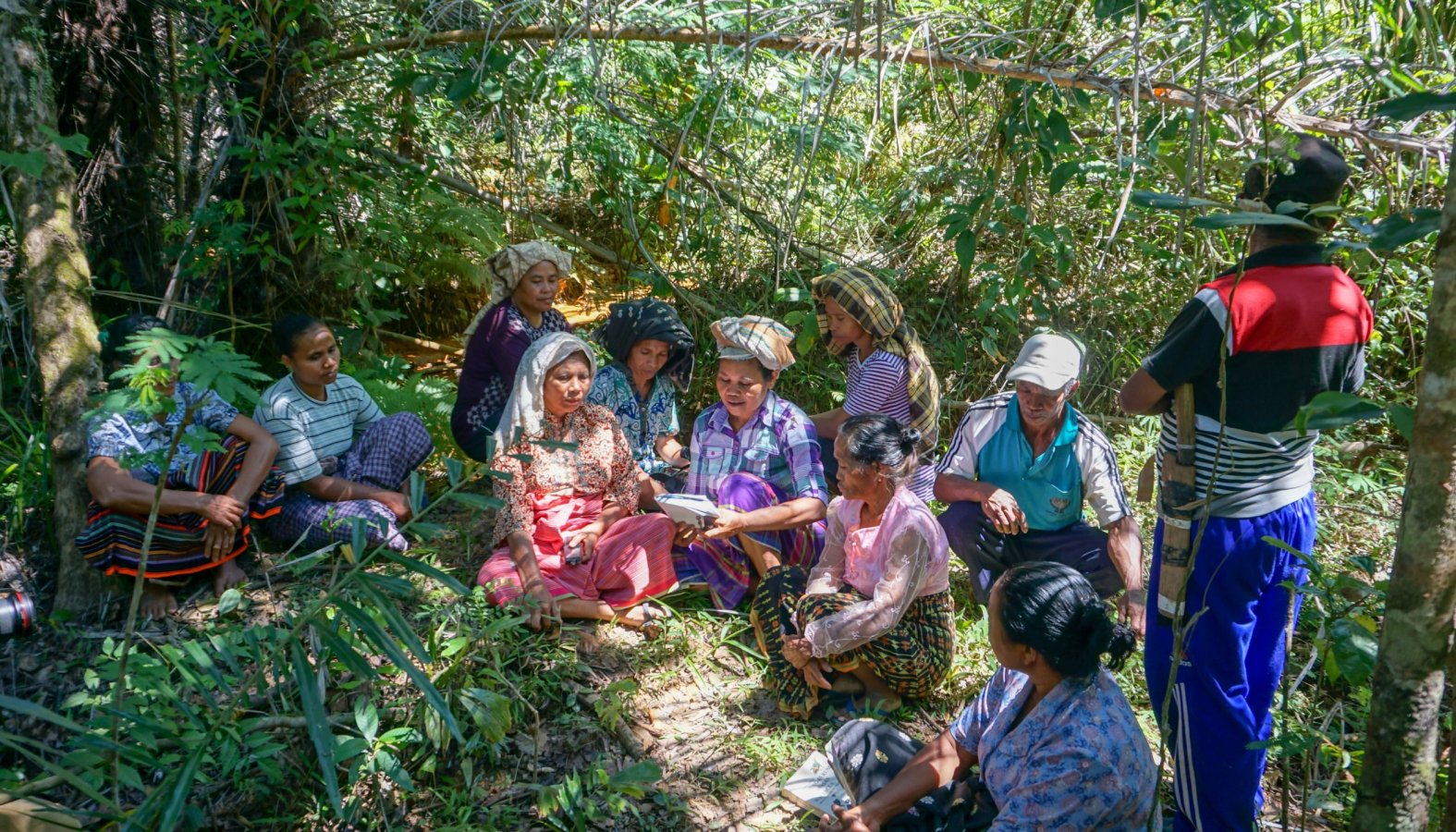
Forest and ecosystem restoration involves much more than ecology. It involves land-use change, shifts in livelihoods, evolving governance arrangements, and decisions that directly shape the daily lives of Indigenous Peoples and local communities. Measuring restoration success through ecological indicators alone tells only part of the story. Understanding whether restoration is truly working requires understanding what it means for the people living within and around those landscapes.
The paper makes the case that wellbeing monitoring is not simply a reporting requirement. When embedded from the outset, wellbeing metrics can actively shape how restoration projects are designed, governed, and adapted over time.
A multidimensional approach to wellbeing
Human wellbeing in restoration contexts is inherently complex, encompassing material conditions such as income and access to resources alongside non-material dimensions including cultural continuity, identity, and a sense of agency. No single metric can capture wellbeing across all contexts.
The report identifies six core domains relevant to restoration work, spanning health, education, living standards, safety and security, agency, and social, cultural, and spiritual wellbeing. Rather than attempting to measure everything at once, practitioners are encouraged to select a focused set of two to three domains based on local priorities and project objectives.
A two-tier monitoring framework
A central practical innovation in the report is a two-tier monitoring framework, designed to address the challenge that restoration operates across timescales that often exceed standard project cycles.
The first tier focuses on short-term, project-level indicators such as participation quality, community engagement, and shifts in trust and inclusion. These provide direct feedback for adaptive management within typical project lifecycles.
The second tier tracks longer-term societal outcomes, including socio-economic trajectories, health, and land-use change, often by linking project-level data to national or global datasets. Here, the emphasis shifts from attribution to contribution, recognising that restoration is one of many factors influencing lasting change.
Data justice: not just what you measure, but how
A distinctive thread running through the report is the importance of how wellbeing data are collected and used, not just what is measured. Data are not neutral. They are shaped by power dynamics and can either reinforce or challenge existing inequalities.
The report presents draft guidance on data justice across the full data lifecycle, from research design through to governance and use. Participatory approaches are essential throughout, and monitoring systems should be designed to serve local priorities rather than extract information for external audiences.
Key recommendations
The paper recommends nine key areas for practitioners to consider when embedding wellbeing metrics into any ecosystem restoration initiative. These are:
- Embed wellbeing considerations from the earliest stages of restoration planning
- Adopt multidimensional frameworks that reflect both material and non-material aspects of wellbeing
- Invest in qualitative methods to capture subjective and non-material dimensions
- Implement two-tier monitoring systems, aligned with the theory of change, to address both short- and long-term wellbeing outcomes
- Combine standardised and locally defined indicators to balance comparability and relevance
- Apply data justice principles to ensure ethical and equitable data practices
- Prioritise co-design and meaningful participation of local communities
- Focus on a manageable and feasible set of high-quality indicators aligned with decision-making needs
- Strengthen capacity for data collection, analysis, and interpretation
An invitation to practitioners and funders
Effective restoration requires us to take human wellbeing seriously as a core part of project design and evaluation, not as an afterthought. This report is a contribution to that effort, drawing on the collective expertise of researchers, practitioners, and community representatives from across the restoration community.
We invite practitioners, partners, and funders to explore the findings and join us in building a restoration practice that is as rigorous about people as it is about ecosystems.
This project was supported by the Endangered Landscapes and Seascapes Programme, managed by the Cambridge Conservation Initiative in partnership with Arcadia, with additional funding from the Climate and Land Use Alliance (CLUA).