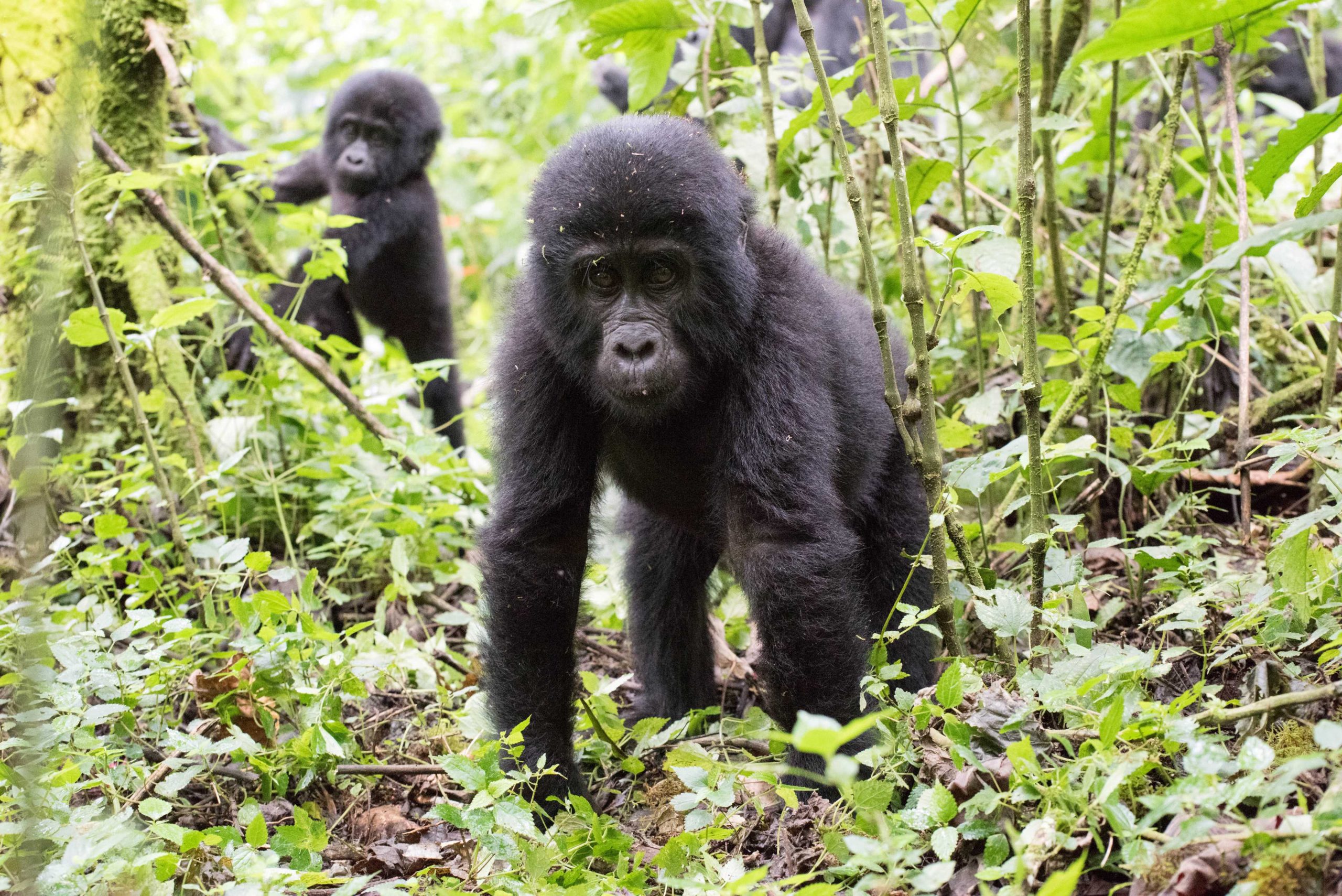
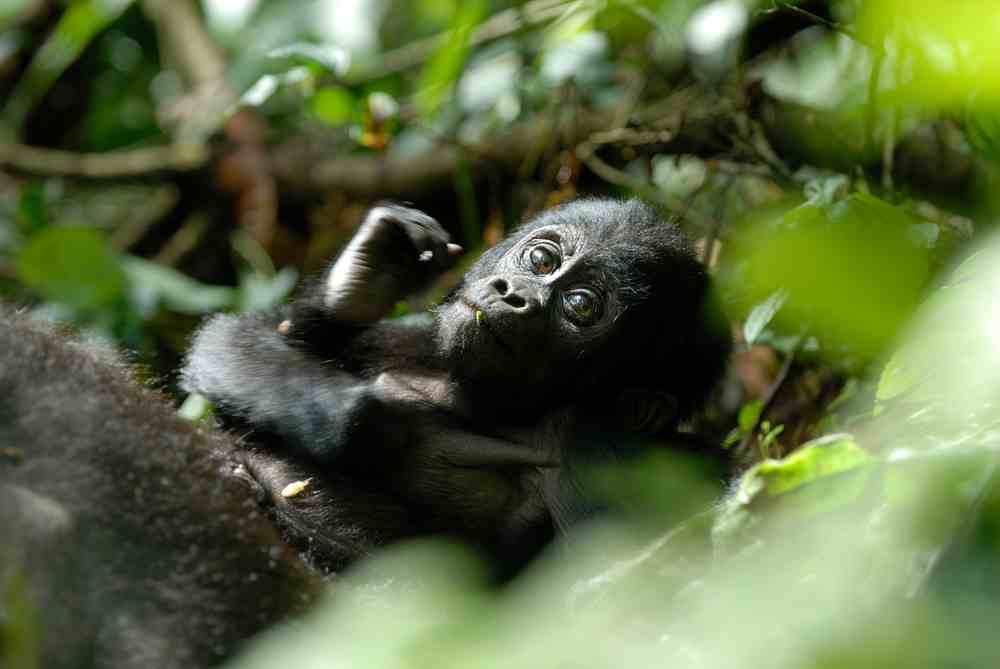
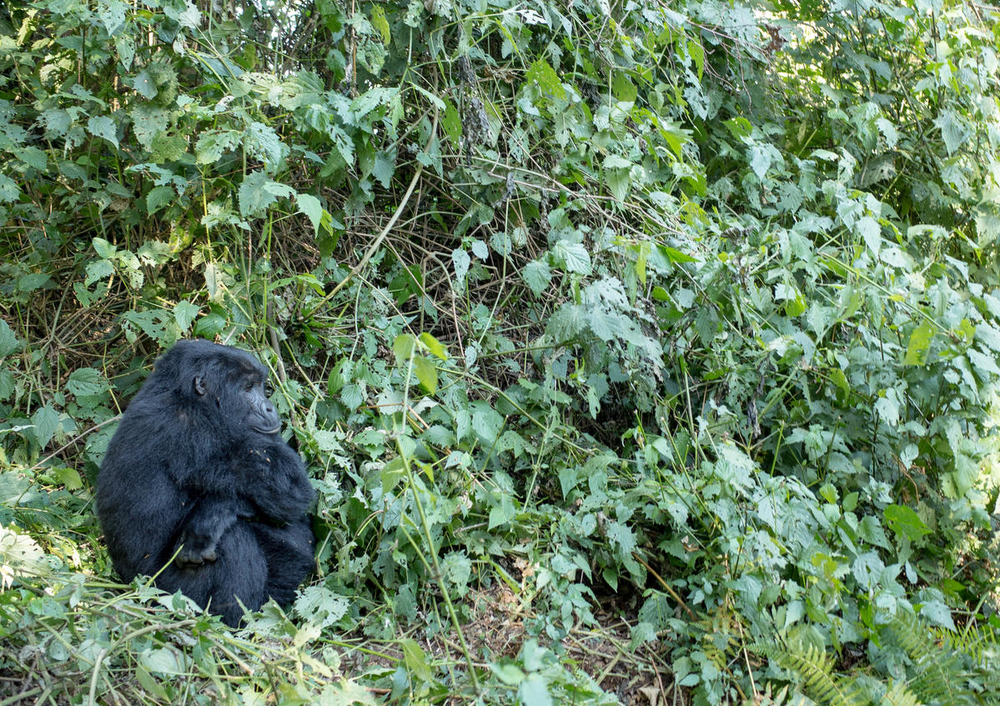
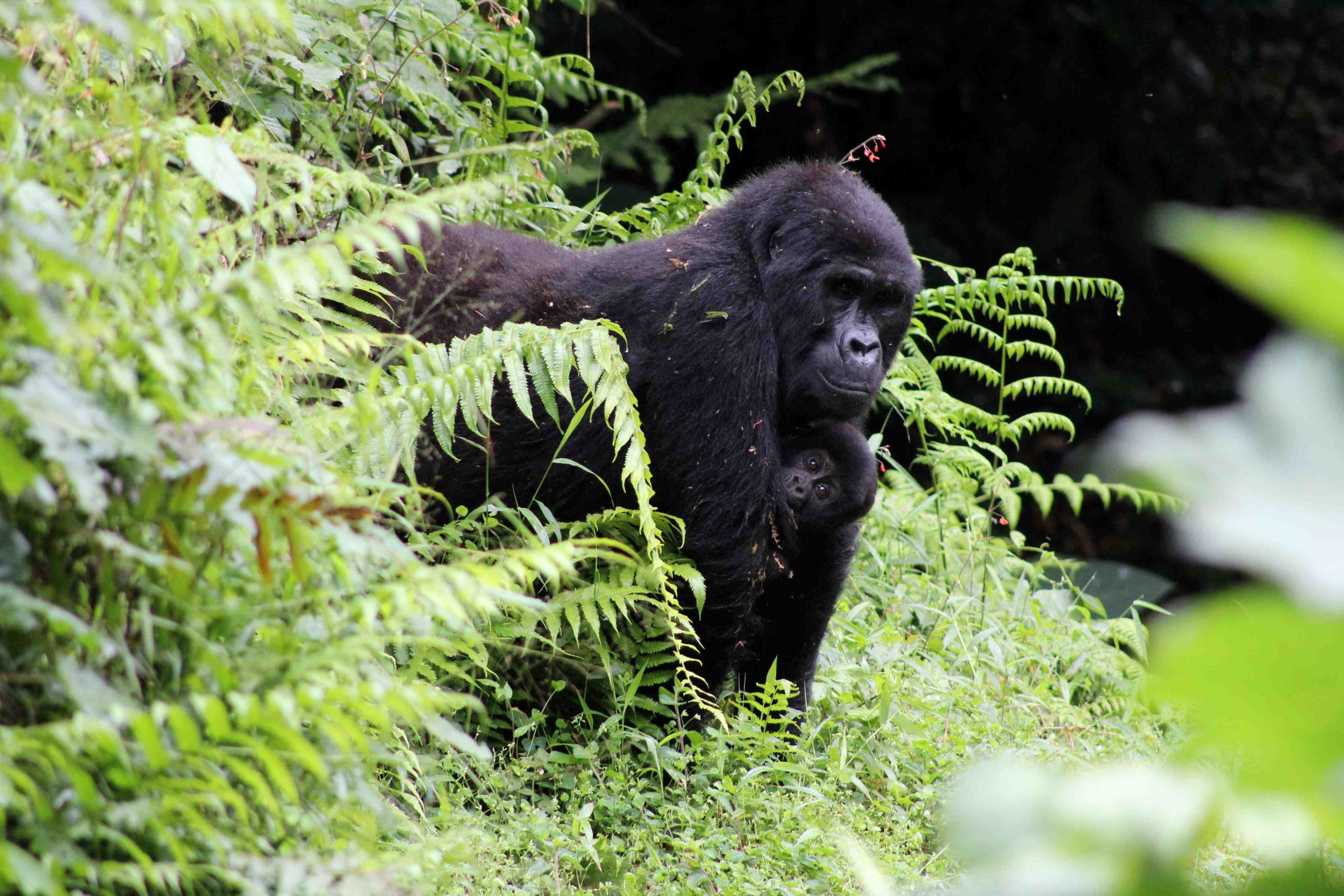
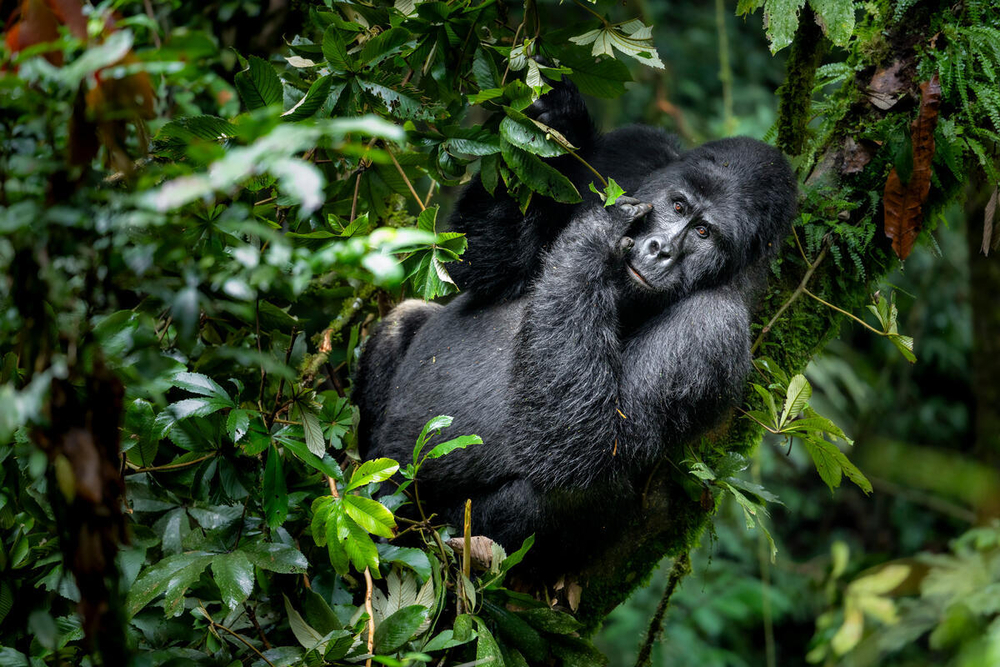
Mountain gorilla (Gorilla beringei beringei) silverback, resting among dense forest understory, Bwindi Impenetrable Forest, Uganda. Endangered.

Bwindi Impenetrable National Park, Uganda

Increasing tree cover for nature and people south of Bwindi Impenetrable National Park

Help Trillion Trees partner WWF work with the International Gorilla Conservation Programme and local communities in southwestern Uganda to expand tree cover in community locations around the protected area, reducing the pressure on the critical habitat of endangered mountain gorillas.

Our Impact

In the southwestern corner of Uganda lies the spectacular Bwindi Impenetrable National Park, a UNESCO World Heritage site renowned for its exceptional biodiversity. To the south of this protected forest, growing human populations face a severe shortage of essential forest resources like firewood, fruits, fodder, and herbal medicine.

To address these challenges, WWF is supporting a comprehensive community tree growing project in eight villages bordering the Nkuringo buffer zone.  Restoring trees to community farms will help to strengthen local livelihoods by providing more sustainable access to natural resources and improving community resilience to the effects of climate change.

Through the establishment of local tree nurseries, the project provides healthy planting materials and essential agricultural training. This collaborative effort empowers local families and youths to spearhead long term restoration. The project creates a sustainable source of wood, food, and other natural forest resources outside protected area boundaries, which significantly reduces the need to enter the protected area illegally. This helps to reduce habitat degradation, the likelihood of the spread of human diseases to the gorillas, and poaching of other wildlife.


Our Target

  • Grow twenty thousand diverse trees within the target villages by June 2027.
  • Build the capacity of at least eighty community members in advanced nursery management and seedling production techniques.
  • Monitor and maintain all newly distributed agroforestry and fruit trees to support high survival rates.
  • Ensure strong community involvement to foster a sense of responsibility and commitment to the project, while creating reliable income opportunities for local households

How We Work

The initiative focuses on integrating diverse, multipurpose tree species directly into local farming systems south of Bwindi Impenetrable National Park. This active approach ensures that community members receive rapid tangible benefits while restoring tree cover across private plots.

Key activities of the project team include:

  • Supporting multi crop nurseries by building and maintaining central tree nurseries in Nombe and Kakooka to supply thousands of healthy seedlings to surrounding farmers.
  • Providing practical training for local tree promoters and nursery operators in specialised skills such as avocado grafting and good agricultural practices.
  • Conducting survival monitoring by utilising digital tracking tools to assess tree growth and ensure high survival rates through targeted field support.

Why Bwindi?

Bwindi Impenetrable National Park is characterised by its steep hills, deep valleys, and dense tropical high rainforest. This unique landscape serves as a vital water catchment area that recharges major rivers and streams across the surrounding region.

The protected area is an ecological sanctuary of global importance, hosting more than one hundred and twenty mammal species, around three hundred and fifty bird species, and hundreds of butterfly species. Most notably, these forests provide a home to endangered eastern chimpanzees, African forest elephants, and almost half of the world’s remaining population of endangered mountain gorillas.

The coexistence of people and wildlife in this fragile ecosystem is essential. In the areas surrounding the protected area, sustainable community stewardship of the land is key to making this possible. By growing multipurpose trees like jackfruit, avocados, mangoes, and grevillea on their farms, local communities can improve their own wellbeing and livelihoods while reducing pressure on the nearby protected area and wildlife.
 

Partners and Contributors