Bwindi Impenetrable National Park is characterised by its steep hills, deep valleys, and dense tropical high rainforest. This unique landscape serves as a vital water catchment area that recharges major rivers and streams across the surrounding region.
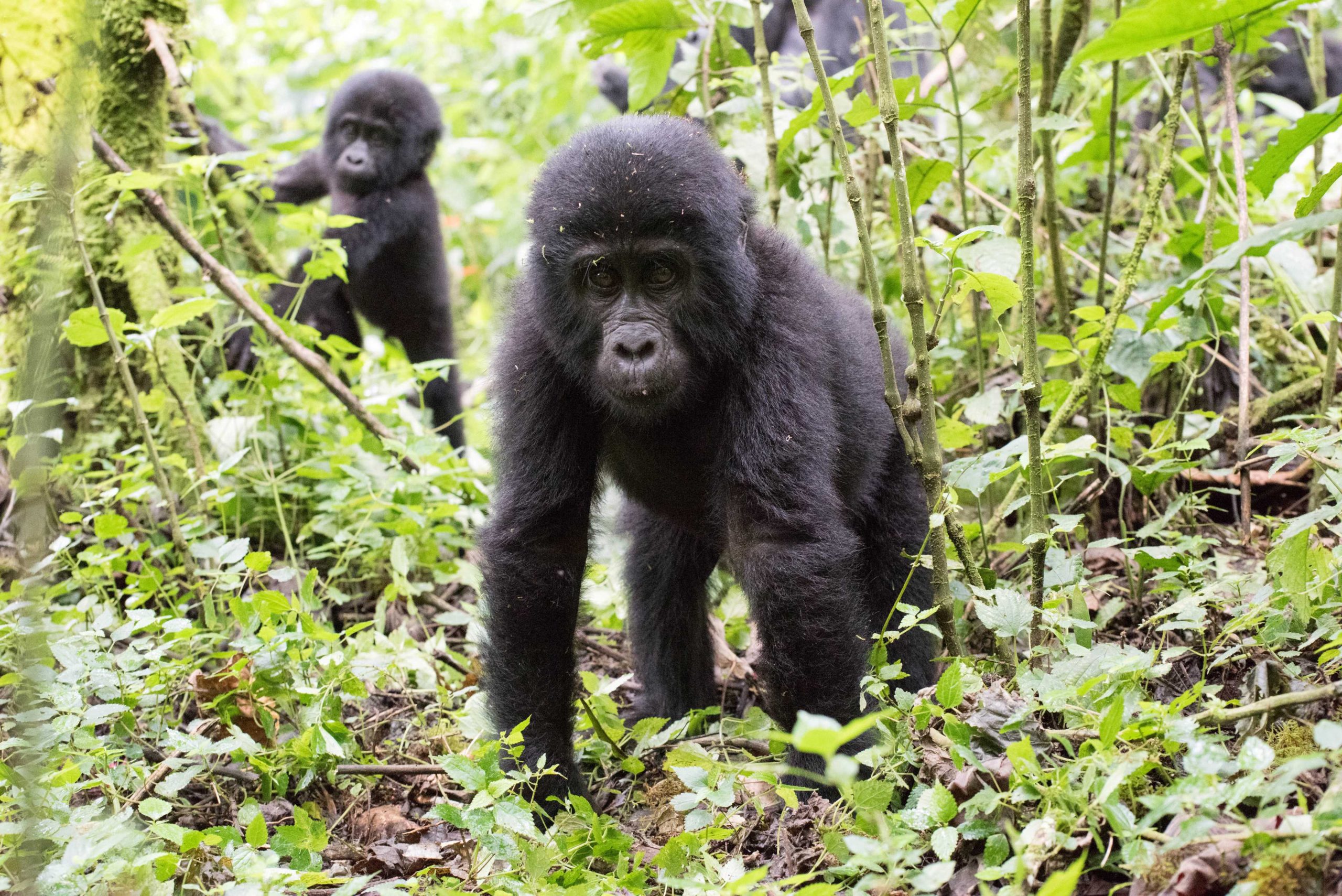
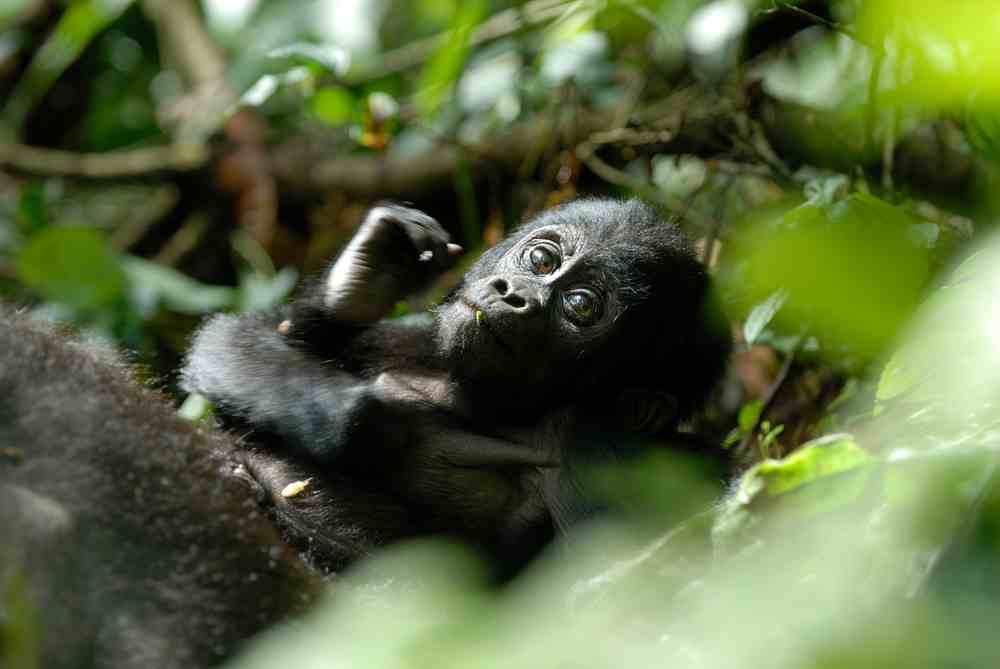
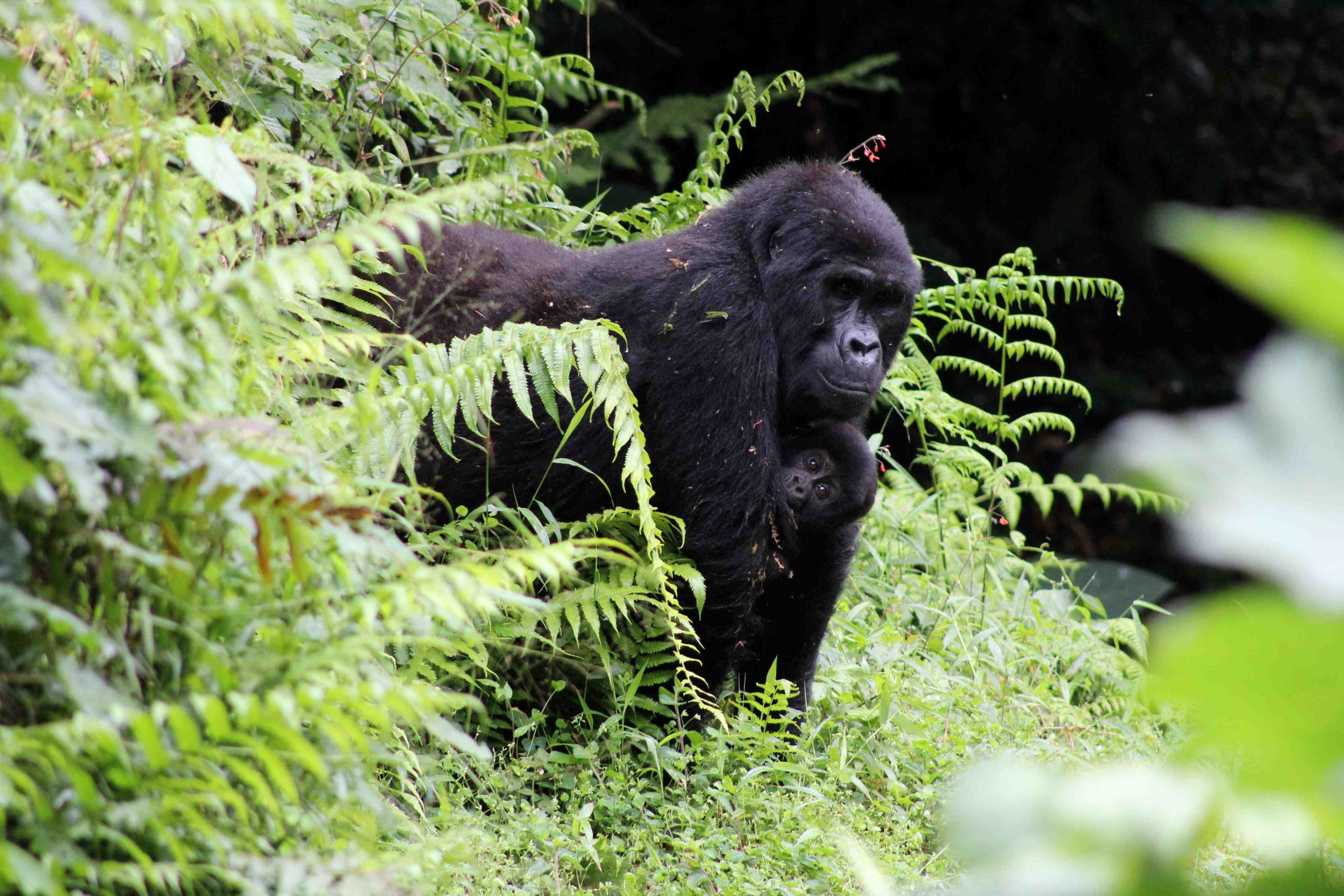
The protected area is an ecological sanctuary of global importance, hosting more than one hundred and twenty mammal species, around three hundred and fifty bird species, and hundreds of butterfly species. Most notably, these forests provide a home to endangered eastern chimpanzees, African forest elephants, and almost half of the world’s remaining population of endangered mountain gorillas.
The coexistence of people and wildlife in this fragile ecosystem is essential. In the areas surrounding the protected area, sustainable community stewardship of the land is key to making this possible. By growing multipurpose trees like jackfruit, avocados, mangoes, and grevillea on their farms, local communities can improve their own wellbeing and livelihoods while reducing pressure on the nearby protected area and wildlife.
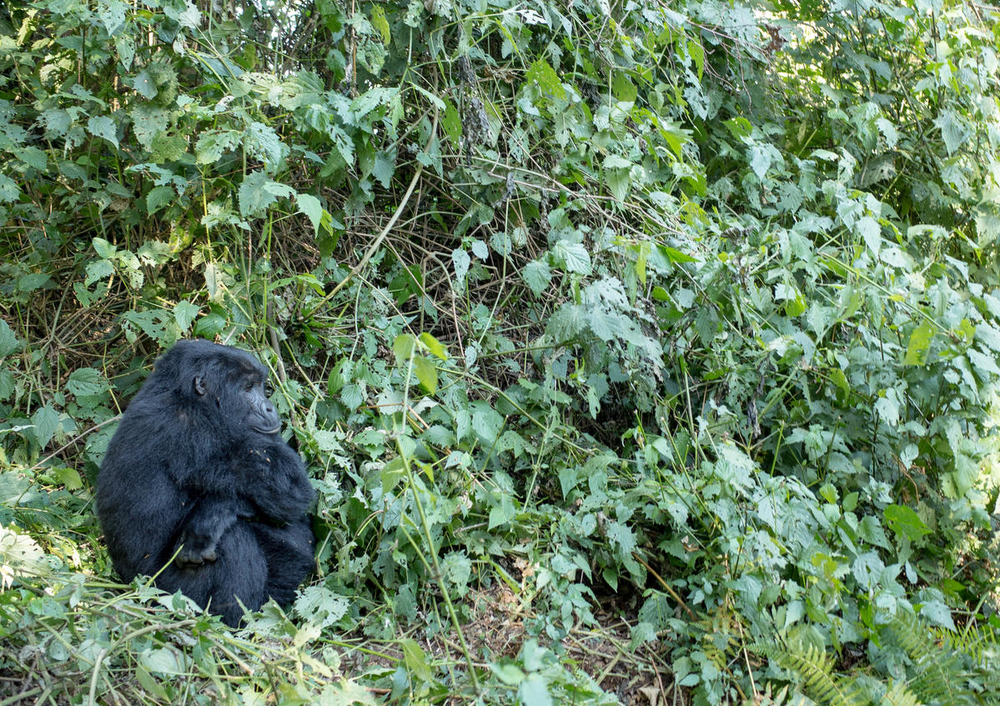
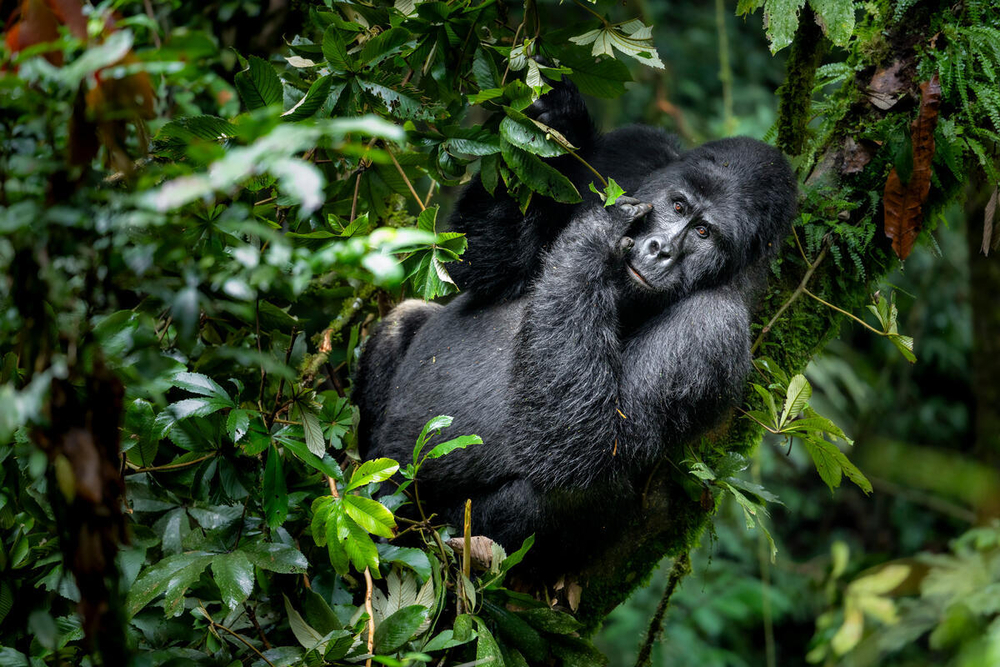 Mountain gorilla (Gorilla beringei beringei) silverback, resting among dense forest understory, Bwindi Impenetrable Forest, Uganda. Endangered.